
Fire Safety
Skyland Firewise Update
By Skyland Firewise · September 2025 · Volume MMXXV, Number 9 · Page 15 · 2 min read
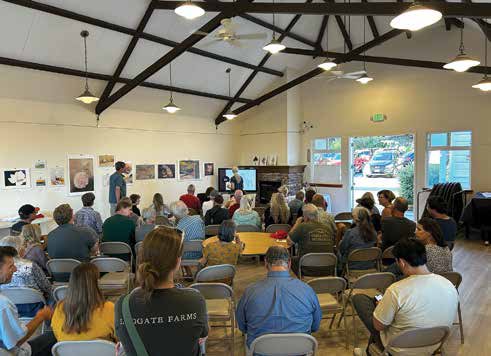
Over 80 Skyland community residents attended our Firewise meeting in August at Skyland Church. Resident Miles Wynn reviewed many topics, including the increase of Firewise neighborhoods in our region, progress that has been made, and plans for the future.
Last year, CalFire noted that the lower Skyland area needed the most brush clearing, so we plan to start there. Many residents have expressed interest in getting involved. Some homeowners have the equipment required to clear trees and brush and are willing to donate to the cause.
This month, we will gather a working crew and the machinery needed to clear the area, as recommended by both CalFire and the Firewise committee. While some homeowners have properly maintained their property and roads, others need assistance. Some residents can’t afford to hire a costly tree-cutting crew.
Other neighbors are seniors or disabled and can no longer do manual work themselves. Whatever the reason, we need to pitch in however we can, to make our safer if or when a fire comes our way. Property Address Number Signs. Cal Fire recommends properties be identfied by address numbers at least four-inches tall on a green reflective metal sign. The signs should be fixed to a nonflammable support, a minimum of four feet from the ground, visible both coming and going by the property. Felton Fire provides signs at a discount to Firewise Communities. Find out more at zayantefire.com/reflective- sign-program, or call 831-335-5100.
For more information, email skylandfirewise@gmail.com. Photo by Miles Wynn Beware the Foxtail Fahimeh Zibaee If you have a dog, it’s the time of year to keep an eye out for foxtails. The seeds from this grass-like weed have dried out and hardened, and their sharp tips can be hazardous to dogs if they step on, brush by, or inhale them.
These pointy seeds can burrow through skin and mucous membranes and cause injury. They most commonly enter through the nose, mouth, ears, paws, and eyes. They can cause abscesses and widespread infections. Once a foxtail is in the body, it cannot come out on its own. If they enter through the nose, you may see persistent sneezing, nasal discharge, and pawing at and shaking of the head. In the paws, you will notice swelling in the paw, excessive licking of a specific area, and open sores. It may cause limping on the affected limb.
Early diagnosis is ideal. Removal is the only treatment for an embedded foxtail. If foxtails migrate deeper through the tissues, surgery may be required to remove them. If you find a foxtail on your pet, you can try to remove it with tweezers, but it is important to remove all the seed parts. If you think that anything remains, or notice swelling or open sores, take your pet to a veterinarian.
To protect your pet, if you walk through areas with foxtails, keep your dog on a leash. Do not allow your pet to run through fields of tall grass. After each walk, check your pet thoroughly and remove any plant material from their bodies. It’s also a good idea to remove foxtails from your property.