Rosicrucian Egyptian Museum
By Kathy McKinney · February 2025 · Volume MMXXV, Number 2 · Page 22 · 3 min read
If you haven’t visited the Rosicrucian Egyptian Museum in San Jose, it’s definitely worth the $10 admission price. The museum claims to host the largest collection of ancient Egyptian artifacts in the western United States, with more than 4,000 artifacts on display. We were not disappointed.
The last time we visited more than 20 years ago, we had our young daughters in tow. Our three-year-old had a major tantrum, so we tag-teamed for a bit and beat a hasty exit after just 45 minutes or so. With that as our reference, we figured we’d spend two hours, maximum, touring the museum. I’d suggest setting aside three to four hours to fully appreciate the exhibits.
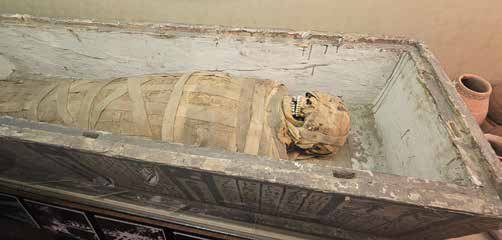
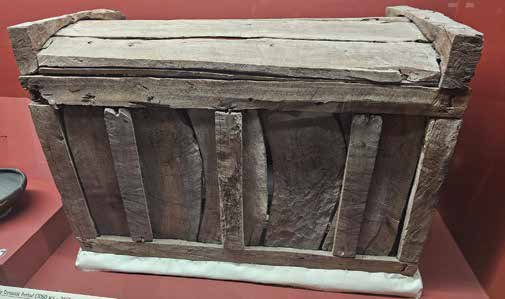
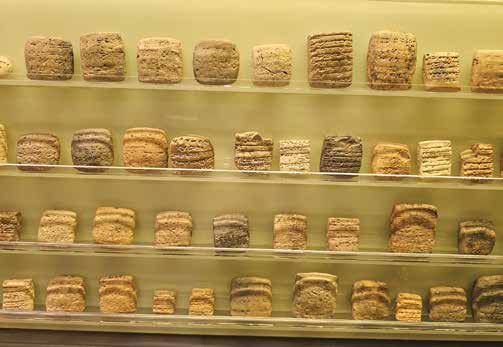
And it’s probably not the best outing for young children, although curious middle- school-age students may enjoy it. There are four main galleries. The exhibits in gallery A focus on the afterlife in ancient Egypt, including mummies, coffins, and offerings. Gallery B is filled with items used in daily life by the ancient Egyptian people, including a game board, a mirror, make up, hair extensions, and even a marriage contract. Other artifacts demonstrate how Egypt both influenced and was influenced by trade and communication with other cultures. You can explore a replica of an underground tomb found at the Beni Hasan cemetery site in Egypt, which contains many images from the tomb of a monarch of the Twelfth Dynasty.
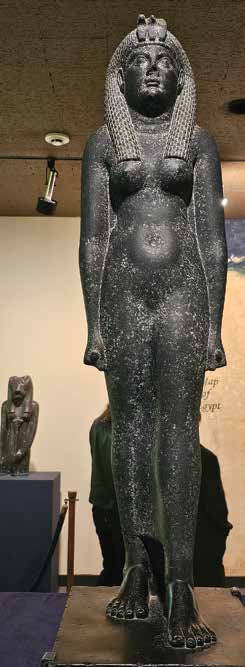
Gallery C focuses on the priests, pharaohs, and religions of ancient Egypt. We learned about rulers from Cleopatra to Ramses the Great, and saw artifacts from various religious traditions, including ritual objects and musical instruments.
the organization claims its roots stretch back to the mystery of ancient Egypt. Its members hold a strong affinity for all things ancient Egyptian and other historical spiritual movements and traditions. While the group studies teachings related to everything from medieval alchemy to the Kabbalah, members maintain that the order is not a religion nor a cult, but a way to “uncover universal truths and work on self-improvement.” The group does not evangelize.
Lewis moved the order’s headquarters to Gallery D focuses on polytheism and monotheism, and features many of the gods and goddesses worshiped in the ancient Egyptian religion. A newer exhibit covers the seven stages of the Alchemical process, a meditation chamber, and a full-size reproduction of an Alchemist’s workshop.
The latter exhibit, in particular, got me wondering who the Rosicrucians are. A little research into the history of this museum and its collection was interesting. The museum’s founder, H. Spencer Lewis, also founded the nonprofit known as the Ancient Mystical Order Rosae Crucis (AMORC) in New York in 1915. However,
San Jose in 1927, because land was fairly cheap at the time. The society acquired artifacts from excavations of the Egyptian city of Amarna in the 1920s. The collection ballooned after Lewis led a journey through Egypt in 1929 that resulted in the donation of additional artifacts and funds to his endeavor—and more acquisitions.
archaeological purposes is no longer in vogue, the museum says that it maintains a dialogue with Egyptian authorities and will In 1932, the order opened the Rosicrucian Egyptian Oriental Museum for its burgeoning collection. In 1966, it opened the facility that greets visitors today.
Sitting on 6.5 acres, the Rosicrucian Egyptian Museum shares grounds with a research library, a peace garden modeled